

Acquisition activity within the roofing sector has accelerated as investors, private equity groups, and established operators pursue trades with resilient demand and strong paths to scale. Roofing stands out because the work is essential in every economic cycle. There are always properties that need installation, replacement, maintenance, or emergency repairs. That reliability, paired with a fragmented market, has made roofing one of the most compelling industries for consolidation.
The companies that demonstrate strong fundamentals, disciplined operations, and recurring revenue potential earn stronger interest and more competitive valuations. Whether you are planning ahead or actively considering a sale, understanding how buyers evaluate roofing businesses is essential.
| What Buyers Want to See For owners who may be searching “how to sell my roofing company,” understanding what buyers value can be the difference between a good offer and a great one. This article explains how buyers assess roofing businesses, which qualities increase acquisition appeal, and what steps can strengthen your position before going to market. |
The Rising Wave Of Roofing Industry Consolidation
The roofing sector has shifted from a localized trade to a priority investment category for institutional capital.
Strong fundamentals, recurring maintenance cycles, essential replacement work, and steady margins create a dependable revenue base that attracts buyers seeking resilience. Industry data puts the U.S. roofing market at around $30 billion in 2024, with forecasts indicating sustained mid-to-high single-digit growth.
At the same time, the market remains highly fragmented. Roughly 100,000 contractors operate nationwide, most serving regional markets with limited scalability. Investors view this fragmentation as an open field for consolidation, where well-capitalized groups can buy, integrate, and expand established operators.
Roadmap Advisors works directly with both acquirers and sellers in this active roofing M&A advisory environment, helping clients identify quality opportunities and prepare their companies for sale.
Why The Roofing Industry Appeals To Buyers
Roofing services are non-discretionary; roofs require replacement or repair regardless of economic cycles. Most industry revenue comes from re-roofing, maintenance, and insurance-driven repairs rather than new construction.
- The repeatable demand profile produces a stable cash flow that appeals to institutional buyers.
Another defining factor is the scarcity of skilled labor. Roofing ranks among the more hazardous and demanding construction trades, and qualified crews are difficult to recruit and retain. Companies supported by experienced field teams often hold a strategic advantage that competitors struggle to replicate quickly or consistently.
- The labor dynamic protects established operators and strengthens the long-term value of their contracts.
Finally, roofing offers scalable opportunities for roll-up strategies. Acquirers can purchase strong regional businesses and then expand the business through targeted add-ons that extend geography or service mix.
- Over time, this approach builds efficient national platforms supported by centralized systems and local brand loyalty.
Fragmented Market Creates Roll-Up Opportunities
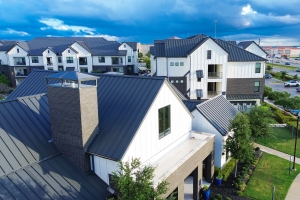
The U.S. roofing market’s fragmentation presents fertile ground for consolidation. Even the 15 largest contractors together account for less than 5% of total industry revenue. Most companies operate well below the $50-million threshold, leaving considerable room for institutional capital to aggregate shares.
Roll-up investors can achieve efficiencies through shared procurement, marketing, and labor allocation. Larger networks negotiate improved vendor pricing on materials such as shingles, membranes, and insulation, while shared scheduling and cross-regional project management increase utilization rates.
Private equity groups frequently build portfolios that balance commercial, residential, and industrial roofing, creating stable, diversified revenue streams.
Characteristics Of High-Value Roofing Targets
- Acquirers consistently prioritize roofing businesses that demonstrate dependable performance and disciplined management. Companies with consistent earnings, a healthy backlog, and recurring revenue through maintenance or multi-year service agreements are more attractive than those dependent on sporadic storm-related spikes.
- Strong leadership depth is equally important. Buyers favor contractors where the business operates smoothly without daily owner involvement. A second layer of managers, estimators, and supervisors signals operational maturity and supports post-transaction continuity.
- Safety and reputation further influence buyer confidence. A roofing company with documented safety programs, low incident rates, and a favorable OSHA history represents lower long-term risk.
- Local recognition, repeat customers, and trusted relationships with property managers and general contractors also reinforce the brand value embedded in the enterprise.
Operational & Financial Drivers Behind Valuation Premiums
Valuation multiples for roofing firms often reflect EBITDA stability and margin quality. Consistent performance through varying weather cycles and market conditions demonstrates resilience, which investors reward. Buyers tend to apply higher EBITDA multiples to roofing companies when profitability is recurring and supported by strong bid discipline rather than isolated large projects.
Systems and processes play an equally significant role. Contractors that have implemented estimating software, project management tools, and CRM systems run more efficiently and integrate more easily after acquisition. These operational investments reduce buyer risk and increase scalability, potentially pushing valuations higher.
Diversified customer bases are another advantage. A balanced portfolio across residential, commercial, and public-sector clients limits exposure to downturns in any single segment.
Multi-year service contracts and inspection programs can further enhance predictability, strengthening a company’s position during valuation discussions.
How Buyers Approach Roofing M&A Integration
After acquisition, buyers typically preserve the local company’s identity to maintain customer loyalty. Roofing is a relationship-driven trade, and local trust often outweighs national branding. Acquirers usually retain existing leadership, phone numbers, and websites while aligning processes behind the scenes.
Many organizations centralize administrative functions, including accounting, human resources, and purchasing, to improve efficiency and reduce repetitive overhead tasks. Shared procurement agreements enable material cost savings, and centralized marketing improves reach across multiple regions.
Integration strategies increasingly emphasize technology and sustainability. Buyers introduce standardized CRM and job management platforms, invest in aerial measurement and digital quoting tools, and expand into energy-efficient roofing systems or solar integration. These initiatives elevate productivity and align with broader ESG-focused investment goals.
What This Means For Roofing Company Owners Considering a Sale
Expert Guidance from Roadmap Advisors:

Understanding buyer priorities early can make a meaningful difference in deal terms and valuation. Institutional acquirers seek consistent earnings, documented contracts, and well-structured organizations. The following checklist highlights the key areas owners should address to position their roofing business for a successful sale.
Owner Readiness Checklist
- Confirm accurate, organized financial statements are available for review.
- Formalize recurring service and maintenance agreements wherever possible.
- Document customer diversification, revenue stability, and contract maturity.
- Demonstrate leadership bench strength by showcasing capable managers beyond the owner.
- Ensure operational systems and processes are scalable, repeatable, and well-defined.
- Demonstrate predictable earnings quality with clear margin drivers.
- Present a compelling growth narrative supported by verifiable data and track records.
Roadmap Advisors works closely with owners to benchmark performance, identify readiness gaps, and design strategies aligned with current market expectations.
Partnering With Experienced Advisors In a Competitive Roofing M&A Market
Roofing industry consolidation continues to accelerate, fueled by recurring demand, limited supply of skilled labor, and growing investor appetite for steady cash-flow trades.
For owners planning to transition, timing and preparation can significantly influence valuation outcomes. Working with an experienced advisor helps clarify a company’s strengths, highlight opportunities for improvement, and align goals with the active market dynamics.
To discuss your roofing company valuation or next steps in positioning your business as an ideal acquisition target, contact Roadmap Advisors for a personal and confidential consultation. Our experience in facilities services M&A and roofing transactions provides the insight needed to make strategic, well-informed decisions in today’s competitive marketplace.