


In mergers and acquisitions, buyers generally fall into two categories: strategic or financial. Both may have the capital and interest to acquire your company, yet their motivations, deal structures, and post-acquisition intentions are distinct.
When owners understand these distinctions, they can plan their exit strategy more clearly and make informed decisions throughout the sale. It shapes how you position your company in the market, the types of buyers you attract, and the future you create for yourself and your business. Advisors and M&A professionals consistently emphasize that recognizing these buyer types early can shape the success of a transaction.
A well-prepared Confidential Information Memorandum (CIM) should reflect these distinctions, presenting your company in a way that appeals to the buyer type most aligned with your goals. This article outlines the key distinctions between strategic and financial buyers and what they mean for business owners planning a sale.
Choosing Between Strategic and Financial Buyers
Financial and strategic buyers have unique motivations when looking to buy a business. Understanding the goals of these buyers helps you understand how valuable your company may appear to each.
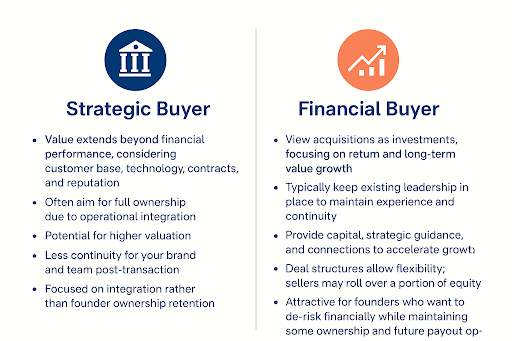
Strategic buyers are looking to buy your company to strengthen their own, and they do this by considering factors like your customer base, contracts, and reputation. They seek integration, and while their plans may increase valuation and result in high offers, the brand and team may be lost in the process.
This may result in some initial growing pains, but the end result is typically worth those costs. Strategic buyers are potentially not a good fit for business owners who want their company to operate independently post-transaction.
Financial buyers, on the other hand, may not make many changes to a company’s structure right away. Instead, they’ll focus on changing strategies to cut costs and boost revenue. While they may see the investment as long-term, many also pay attention to any available exit strategies.
They may not have the same experience with the industry as a strategic buyer, and may expect the sellers to stay involved for a period of time as an operator or consultant.
| Key Takeaway: Strategic buyers integrate to grow their business and may drive higher valuations, while financial buyers optimize performance and focus on returns. Knowing these motivations helps position your company for the best outcome. |
Strategic or Financial: Choosing the Right Buyer to Match Your Exit Goals
The value of selling a business goes beyond the number on the check. A truly successful sale aligns with your personal and professional goals. The type of buyer you choose can influence your post-sale experience, your ongoing involvement, and the legacy you leave behind.
| Buyer Type | Ideal Seller Goal | Key Advantages | Considerations |
| Strategic Buyer | Full exit, retirement, clean transition | Premium offers, operational synergies, simpler exit | No post-sale control; decisions shift entirely |
| Financial Buyer | Continued involvement, growth focus | Access to capital, professional support, shared upside | Longer timeline for full liquidity; requires active participation |
Strategic Buyer: Ideal for sellers seeking a full exit or retirement. Strategic buyers often pay a premium because of potential synergies with their existing operations. This route usually results in a cleaner transition, but once the deal closes, decision-making and control shift entirely to the new owner.
Financial Buyer: Best for sellers who want to remain involved in the company’s growth. Financial buyers bring capital and operational expertise to support expansion, acquisitions, or professionalization initiatives. It is common for financial buyers to require sellers to hold onto a portion of the company post-transaction, which allows you to benefit from the upside of the business’s next chapter.
Why Making the Distinction Early Matters

An experienced M&A advisor will help you evaluate how each type of buyer views your business, what value drivers matter most to each of them, and how to position your company accordingly. Well-run processes consider both perspectives, but customize positioning and deal structure to attract the most fitting counterparties.
Buyer categories matter, but are secondary to structuring a deal that reflects your priorities during the transaction and after it’s complete.
Choosing the Right Partner for Your Next Chapter
When sellers structure deals around buyer motivations, both sides benefit, resulting in smoother and more successful transactions. With thoughtful preparation, the right partner can achieve both liquidity and lasting success. At Roadmap Advisors, we help business owners make these decisions with confidence. Our team brings experience from both the buy-side and sell-side, so we understand what drives value from every perspective.
Our process starts with getting to know your goals and vision so we can help shape an exit plan that meets your definition of success. If you’re thinking about selling or preparing for a future transaction, schedule a confidential consultation with our advisors. Together, we can identify the right buyers, structure the right deal, and create an outcome that reflects the full worth of what you have built.